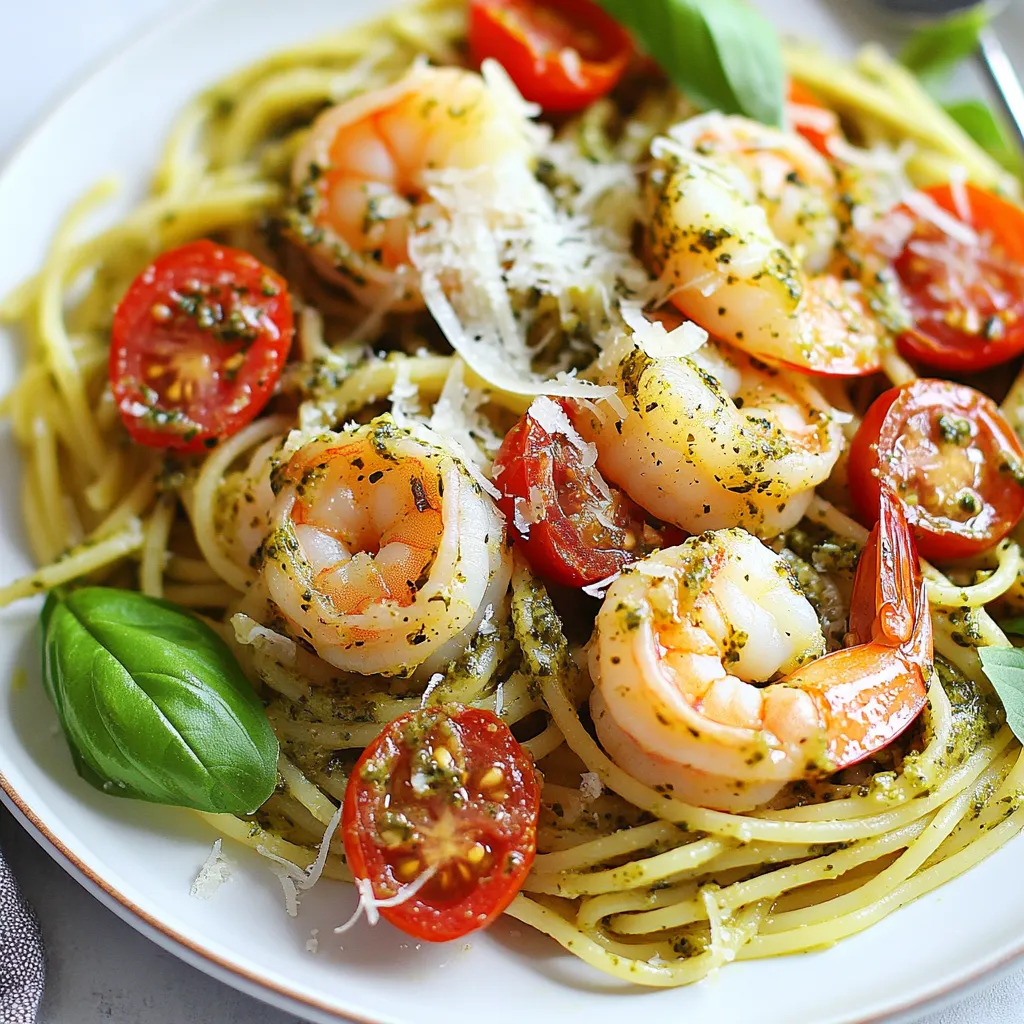
If you want a quick, tasty dinner, Pesto Shrimp Pasta is perfect. It’s easy to make and packed with flavor. This dish combines succulent shrimp, fresh pesto, and your choice of pasta for a meal that’s ready in under 30 minutes. I’ll guide you through the simple steps, handy tips, and delicious variations. Say goodbye to boring weeknight meals and hello to this delightful dish that everyone will love!
Why I Love This Recipe
- Quick and Easy: This dish comes together in just 20 minutes, making it perfect for busy weeknights when you want a delicious meal without spending hours in the kitchen.
- Flavorful Pesto: The vibrant pesto sauce adds a burst of flavor that complements the shrimp and pasta beautifully, ensuring every bite is packed with taste.
- Fresh Ingredients: With fresh tomatoes and basil, this recipe not only tastes great but also looks appealing, making it a feast for the eyes as well.
- Customizable: You can easily switch up the pasta type or add your favorite vegetables, allowing for endless variations based on your preferences.
Ingredients
Pasta Selection
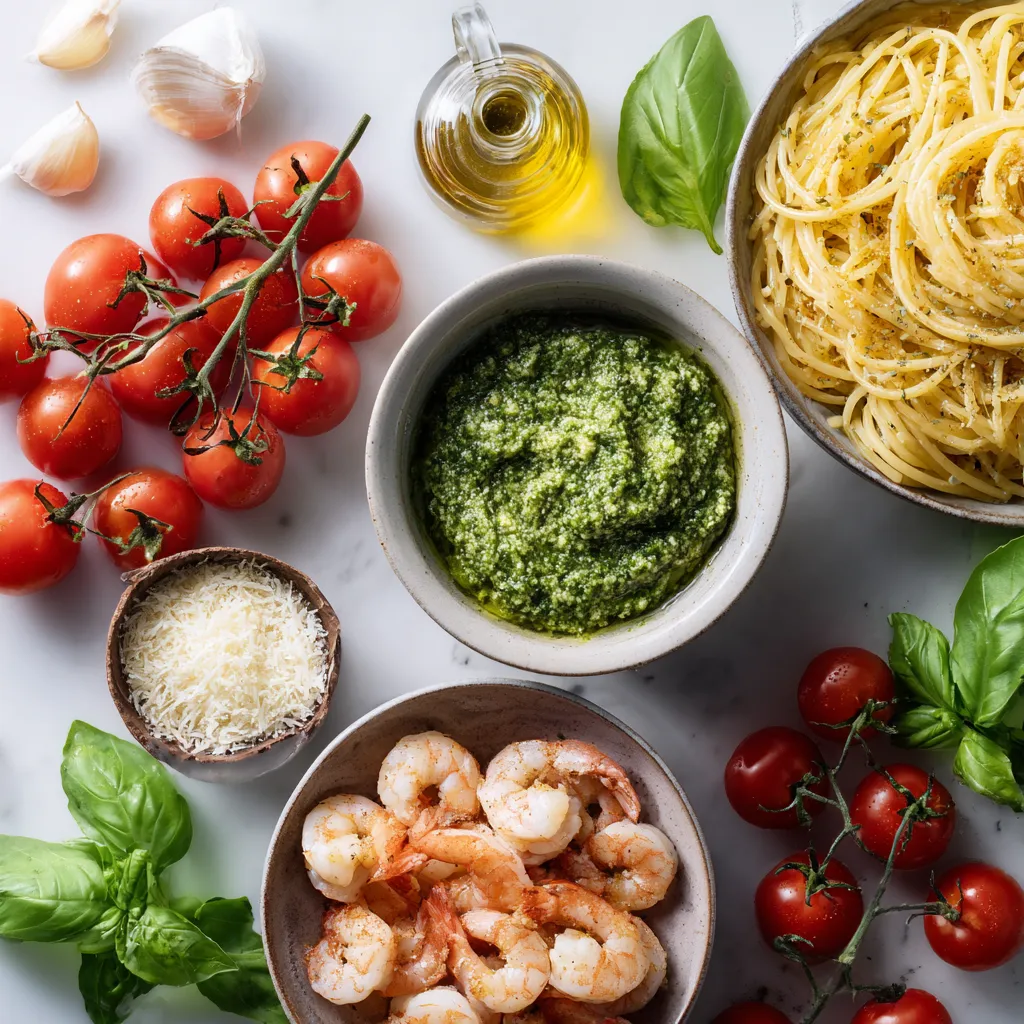
For this dish, I recommend using 8 ounces of spaghetti. Spaghetti is a classic choice. It cooks well and holds the sauce nicely. You can also use other pasta types like fettuccine or penne. Choose what you love best!
Shrimp Details
You need 1 pound of shrimp for this recipe. Make sure they are deveined and peeled. This saves time and makes cooking easier. Fresh shrimp tastes great, but frozen works too. Just thaw them before cooking.
Required Seasonings and Garnishes
You will need a few simple seasonings. These include:
– 1 cup of homemade or store-bought pesto
– 1/2 cup cherry tomatoes, halved
– 1/4 cup grated Parmesan cheese
– 2 tablespoons olive oil
– 2 cloves garlic, minced
– Salt and pepper to taste
– Fresh basil leaves for garnish
These ingredients add flavor and freshness to your meal. The garlic and olive oil give a nice base. The basil adds a lovely touch at the end. Enjoy the vibrant colors and tastes!
Step-by-Step Instructions
Cooking the Pasta
Start by boiling water in a large pot. Add salt to the water for flavor. Once it boils, add 8 oz of spaghetti. Cook it according to the package instructions until it is al dente. This means it should be firm but not hard. After cooking, reserve 1/2 cup of the pasta water. Drain the pasta and set it aside.
Sautéing the Shrimp
Next, heat 2 tablespoons of olive oil in a large skillet over medium heat. Add 2 cloves of minced garlic. Sauté for about 30 seconds. You want to smell the garlic, but do not burn it. Now, add 1 lb of peeled and deveined shrimp to the skillet. Season them with salt and pepper. Cook for 2-3 minutes on each side. The shrimp should turn pink and opaque when done.
Combining Ingredients and Cheese
Lower the heat on the skillet. Add the cooked pasta to the shrimp. Toss in 1 cup of pesto and 1/2 cup of halved cherry tomatoes. Pour in a splash of the reserved pasta water. This helps mix everything well. Stir until the pasta is coated in pesto. Finally, add 1/4 cup of grated Parmesan cheese. Mix until the cheese melts and blends in. If it looks dry, add more pasta water.
Tips & Tricks
Perfecting the Pasta Texture
To get the best pasta texture, cook it al dente. This means the pasta should be firm when you bite it. Follow the package instructions but check a minute early. Reserve some pasta water before draining. This starchy water helps when mixing with the sauce. Adding a splash of it can keep your dish creamy and smooth.
Enhancing Shrimp Flavor
Start by seasoning the shrimp well. A good sprinkle of salt and pepper works wonders. Cook the shrimp until they turn pink and opaque. This usually takes about 2-3 minutes per side. If you want more flavor, add a pinch of red pepper flakes or lemon juice when cooking. These small steps make a big difference in taste.
Best Practices for Using Pesto
Pesto is packed with flavor, so use it wisely. If you make homemade pesto, let it sit for a bit to meld the flavors. When mixing pesto with pasta, add it slowly and toss well. If the dish seems dry, use reserved pasta water to help. This keeps the pasta from clumping. Always save some fresh basil leaves to garnish your meal. This adds a lovely pop of color and freshness.
Pro Tips
- Fresh Pesto is Best: If you can, use homemade pesto for a fresher, more vibrant flavor that elevates the dish.
- Don’t Overcook the Shrimp: Cook the shrimp just until they turn pink and opaque to ensure they remain tender and juicy.
- Adjusting Consistency: Use the reserved pasta water to adjust the sauce’s consistency; it helps the sauce cling to the pasta better.
- Garnish with Flair: Adding fresh basil and extra Parmesan not only enhances the dish visually but also boosts its flavor profile.
Variations
Adding Vegetables
You can make pesto shrimp pasta even better by adding vegetables. Fresh veggies boost flavor and color.
– Spinach: Toss in a handful of fresh spinach. It wilts quickly and adds nutrients.
– Zucchini: Slice zucchini into thin rounds or half-moons. Sauté them with the shrimp.
– Bell Peppers: Add chopped bell peppers for a sweet crunch. They cook fast and taste great.
These veggies make the dish more balanced and fun to eat. Plus, they add extra vitamins!
Different Types of Pasta
You can swap out the spaghetti for other pasta types. This change gives new textures and flavors.
– Penne: This pasta has ridges that hold sauce well. It’s perfect for pesto.
– Farfalle: Also known as bow-tie pasta, it looks cute and mixes well with shrimp.
– Gluten-Free Options: Try gluten-free pasta if you need it. There are many good brands available.
Each pasta type offers a unique taste and feel. Choose based on your mood or what you have at home.
Customizing Pesto Flavors
Pesto can be unique to your taste. You can change its flavor with simple swaps.
– Nuts: Use walnuts or cashews instead of pine nuts. Each nut gives a different taste.
– Cheese: Swap Parmesan for pecorino or nutritional yeast for a vegan option.
– Herbs: Add fresh mint or parsley for a twist on classic basil pesto.
These changes keep the dish exciting. Experiment to find your favorite blend!
Storage Info
Refrigeration Guidelines
After making pesto shrimp pasta, let it cool down. Store it in an airtight container. Keep it in the fridge for up to three days. If you plan to eat it later, try to eat it within this time frame. The pasta may get soft, but it still tastes great.
Freezing Instructions
You can freeze pesto shrimp pasta, but keep in mind that the texture might change. Place the cooled pasta in a freezer-safe container. It can last up to two months in the freezer. To avoid freezer burn, use a tight lid or wrap it well. When you are ready to eat, thaw it in the fridge overnight.
Reheating Tips
To reheat, use a skillet or microwave. If using a skillet, add a splash of water or olive oil. Heat it over medium until warm. If using a microwave, cover it and heat for one minute at a time, stirring in between. This keeps the pasta moist and tasty.
FAQs
Can I use frozen shrimp?
Yes, you can use frozen shrimp for this recipe. Just make sure to thaw them first. To thaw shrimp, place them in a bowl of cold water for about 15-20 minutes. Once thawed, pat them dry with a paper towel. This helps achieve a better texture when cooking. Frozen shrimp can be just as tasty as fresh shrimp.
Is pesto vegetarian?
Most pesto is vegetarian, but some may have cheese. Traditional pesto often contains Parmesan cheese. If you want a vegan option, look for a cheese-free pesto. You can also make your own by blending basil, nuts, garlic, and oil. This way, you control the ingredients and keep it vegetarian.
How can I make this recipe low-carb?
To make this recipe low-carb, swap regular pasta for zucchini noodles or spaghetti squash. These options are lower in carbs and calories. You still get a great texture and flavor without the carbs. Using cauliflower rice is another great choice. It absorbs flavors well and keeps the dish light and healthy.
This blog post covered how to make a delicious shrimp and pasta dish. We looked at choosing the right pasta, fresh shrimp, and key seasonings. I detailed how to cook the pasta perfectly, sauté shrimp, and mix everything with cheese.
You learned tips for great texture and flavor, plus ways to customize your dish. Finally, we discussed storing leftovers and answered common questions. Enjoy experimenting and making this dish your ow